


Key Takeaways:
- Start with What’s Free: Maximize free tools first, like your Google Business Profile and local community boards, to attract customers without spending a dime.
- Target People Ready to Buy: Spend your marketing dollars on audiences actively looking to buy, rather than casting a wide net with generic social ads.
- Tap Into Local Word-of-Mouth: Neighbors trust neighbors. Team up with nearby shops for joint events and partner with local social media creators to build authentic trust.
- Check In on Past Clients: Sending a friendly email to someone who bought from you before costs nothing and brings in new sales much faster than chasing brand-new prospects.
- Add Value Instead of Cutting Prices: Protect your profits. Offer a small bonus or a limited-time coupon for their next visit rather than slashing your regular prices.
- Thrive Internet Marketing Agency is a great choice for businesses with a limited budget because we keep your investment focused on what drives sales through a strategy-first and data-driven approach. We also have packages starting as low as $500.
Let's be honest. Business is tough right now across the board. From major brands to independent shops, everyone is rethinking how they want to spend their money. The pressure hits even harder on small businesses, where there's zero margin for expensive marketing that doesn't have positive outcomes.
So, the hesitation to invest in customer acquisition is completely valid. The good news is marketing on a budget is entirely possible. With the right approach, you can attract customers without draining your bank account.
We created this blog to outline the most inexpensive ways to advertise your business. Below, we discuss the following areas:
- How to Get Customers for Free
- What Are the Best Free or Low-Cost Marketing Channels?
- Where and How to Run Paid Campaigns on a Budget
- How to Prioritize Your Marketing Spend
- Low Cost Marketing Ideas to Increase Sales
How to Get Customers for Free
You can still win new customers even when money is tight. The most reliable approach is showing up where ready-to-buy customers are searching for answers. When you want to find free ways to promote your business, start by establishing a presence on platforms that reward quality.
Here are three places to begin:
- Google Business Profile (GBP): For local services, this is your most valuable free asset. Claiming your listing puts you on Google Maps and search results.
- Educational Content: Write simple guides or social posts that answer the real questions customers ask. Depending on what you sell, strong topics include pricing breakdowns, typical timelines, common mistakes to watch out for and quick fixes for everyday problems.
- Community Participation: Join local neighborhood groups and online spaces where your target buyers hang out. Helping people solve issues quickly builds trust, and they will naturally check out your business when they need professional support.
The right tools also make it much easier to get your business noticed. Here are a few free options to start with:
| Tool | Best Used For | How It Boosts Visibility |
|---|---|---|
 Canva | Graphic Design | Lets you quickly create branded social posts, service menus, client handouts and lead magnets using pre-made templates. |
 Google Search Console | Website Search Analytics | Shows the exact phrases people use to find your site on Google so you can fine-tune your website copy based on real search behavior. |
 Mailchimp | Email Capture and Newsletters | Offers generous free tiers to collect visitor emails and send automated follow-up sequences. |
 Loom | Short Video Messages | Replaces long emails or proposals with quick screen-share audits and personal walkthroughs. |
 AnswerThePublic | Content Research | Gives you daily free searches revealing the exact questions and pain points buyers type into search engines. |
Ultimately, finding reliable free ways to promote your business comes down to trading ad spend for steady effort. But don't tackle every platform or tool all at once. Pick one or two methods that match your strengths, then stick with them long enough to see what clicks with your audience.
What Are the Best Free or Low-Cost Marketing Channels?
Trying to establish a presence on every marketing channel is the fastest way to dilute your results. Instead of spreading your resources thin, focus on specific platforms where active customer intent and strong discovery work directly in your favor.
These platforms deliver the strongest returns:
People treat Reddit as an honest message board to ask for real opinions. Buyers look to groups like r/smallbusiness or r/homeimprovement for honest recommendations.
The Approach:
Hard selling will get you ignored or banned right away. Instead, search for topics where people need help with issues you understand well. Then, give useful answers that actually solve their problem. Make sure to put your business name and website link in your bio so readers who appreciate your help can look you up on their own.
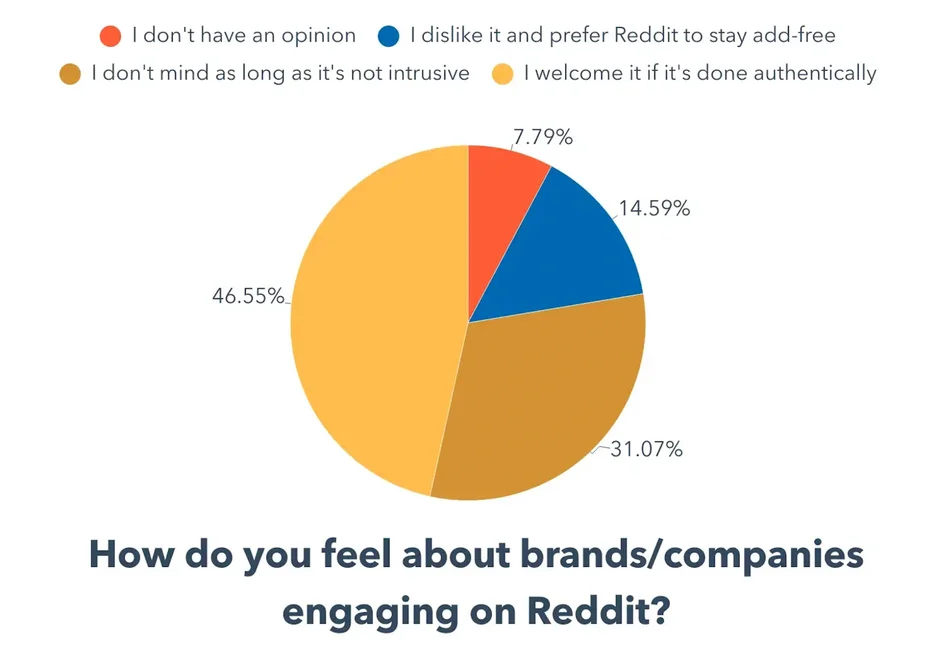
Image Source: HubSpot
Reddit users don't mind interacting with brands as long as the engagement feels authentic.
TikTok and YouTube Shorts
Most traditional platforms only show your posts to people who already follow you. TikTok and YouTube Shorts rely on recommendation feeds that show short videos to viewers based on what they like watching.
The approach:
You do not need expensive cameras or editing tools to create short reels. Simple phone videos usually do better because they feel real. Keep clips around 30 to 60 seconds and stick to simple ideas like:
- Unfiltered behind-the-scenes clips of your workshop or workspace
- Process videos showing a product being made from raw material to finished piece
- "Pack an order with me" videos highlighting custom touches or customer requests
- Unscripted commentary about a day-in-the-life challenge or a project that went wrong
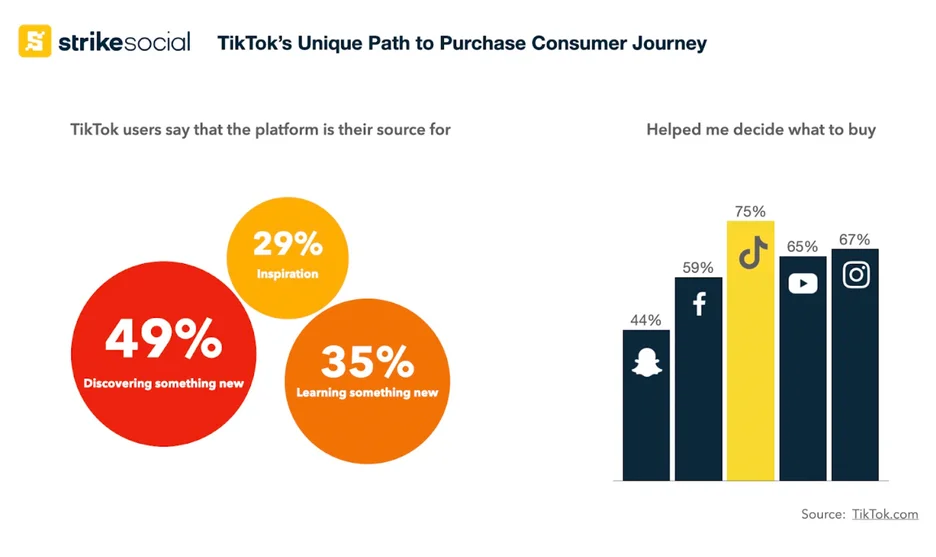
Image Source: Strike Social
TikTok is no longer just for entertainment; 75% of its users turn to the platform to decide which products to purchase next.
Nextdoor
Nextdoor connects people who live in the same area. When homeowners need someone to fix a fence or handle yard work, they usually check the platform first to see who locals trust.
The Approach:
Start by claiming your free business page, then ask a few happy local clients to leave you a quick recommendation. This helps your name show up organically in nearby feeds.
From there, make a habit of checking local posts for people seeking help with your type of work, and jump in directly from your business account with clear details about your availability and rates.
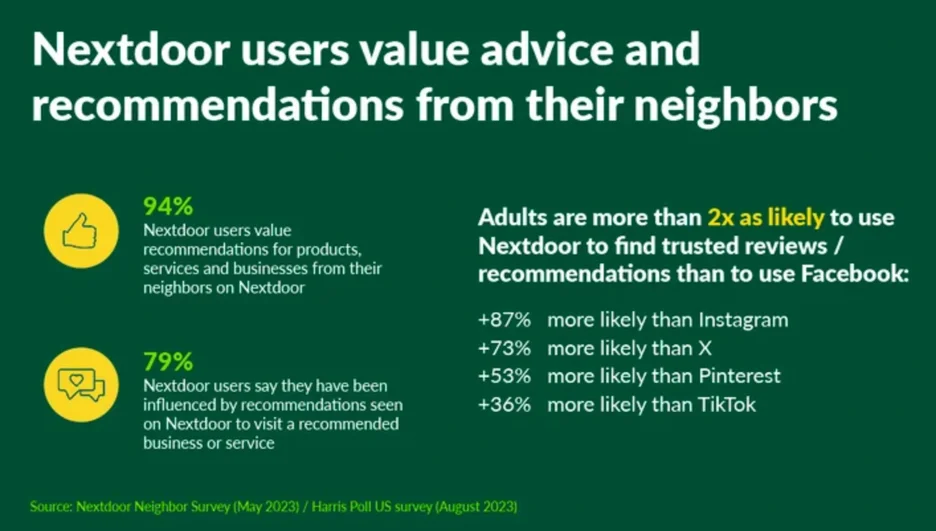
Image Source: Strike Social
With 94% of users valuing neighbor referrals, Nextdoor functions as a high-trust referral engine that directly prompts 79% of members to hire local businesses.
Standard posts on LinkedIn still get solid reach without paid boosts. People scroll the feed during the workday with business on their minds, so they are much more open to professional ideas and work-related advice.
The Approach:
Focus on sharing real takeaways from your daily work. This can mean highlighting a common mistake you see clients make or offering a simple checklist they can put to work right away.
Rather than treating the platform as a one-way broadcast, spend 10 to 15 minutes each day leaving thoughtful comments on updates from peers and prospective clients. This way, people can get familiar with your name before you ever pitch them.
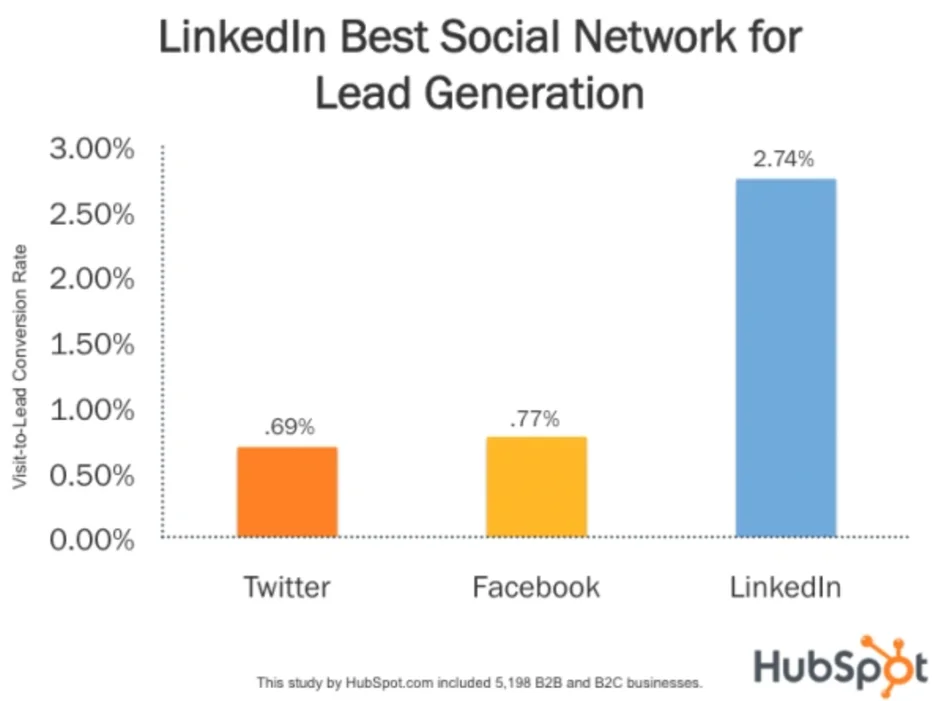
Image Source: HubSpot
LinkedIn achieves a 2.74% visitor-to-lead conversion rate, nearly triple that of Facebook or Twitter.
Where and How to Run Paid Campaigns on a Budget
Running ads can feel risky when money is tight. Big brands have the cash to burn on flashy awareness campaigns, but doing digital marketing on a budget means every dollar you spend must drive actual sales.
Focus your spend on these practical ad tactics to get the most out of every dollar:
| Ad Strategy | Best For | Why It Works on a Small Budget |
|---|---|---|
| High-Intent Ads (Google Ads) | Urgent or specific services like plumbing or emergency repairs. | Long-tail search phrases target people ready to buy, avoiding waste on broad search terms. |
| Micro-Budget Retargeting (Meta) | Online stores and businesses with existing site traffic. | You only pay to show reminder ads or testimonials to people who already visited your site or checked your pricing. |
| Hyper-Local Radius Ads (Nextdoor and Meta Local) | Brick-and-mortar storefronts and neighborhood-specific trades. | Tight geographic pins ensure every dollar reaches nearby residents. |
The secret to making a small budget work is simple: stop paying to reach strangers. Practical small business advertising ideas focus your money on two specific groups. People looking for an immediate fix to a problem you solve and people who already checked out your site and just need a little push to buy.
How to Prioritize Your Marketing Spend
Prioritizing your spend effectively requires funding the highest-probability conversions first, then letting new revenue fund your broader outreach. When testing different small business marketing ideas, think of your budget as a ladder: you only move money up to the next rung once the step below it is working.
1. Fix Your Storefront First
Never spend on advertising only to send visitors to a slow website or an incomplete profile. Make sure your phone number is tap-to-call on mobile, and keep your core pricing simple to understand.
2. Remind People Who Already Know You
Put your first $50 to $100 toward retargeting people who have already visited your site. It is one of the most cost-effective small business advertising ideas because converting existing interest costs far less than finding cold leads.
3. Show Up When People Need Immediate Help
Once your reminder ads run smoothly, spend remaining cash on buyers actively searching for a fix. Target specific search phrases where prospects need to hire someone right away.
4. Test Brand Awareness Last
Hold off on spending money to reach cold audiences until your core channels reliably generate revenue. Paying to boost everyday posts can wait until profits cover the cost of the experiment.
Marketing on a budget is an iterative process. When a specific campaign lands a new paying client, take a percentage of that profit and roll it back into the channel that delivered the lead. This creates a self-funding loop where your advertising spend grows in direct proportion to your actual sales.
Low Cost Marketing Ideas to Increase Sales
You do not need a massive budget to get your phones ringing. Trying out the following low budget marketing ideas gives you a reliable way to attract new customers without putting your cash reserves at risk:
For Service-Based Businesses
- Mini-services: Package a small piece of your work at an entry-level price to get new clients through the door. This can be a quick diagnostic or 20-minute audit.
- Referral credits: Give existing clients a $20 to $25 account credit whenever a referred contact books their first paid service.
- Booking incentives: Fill recurring slow days by pairing bonus service add-ons or discounted rates strictly with your quietest appointment windows.
- Live workshops: Host free demonstrations, like a basic maintenance walkthrough or a seasonal prep session, to showcase your expertise directly to local prospects.
For Product-Based Businesses
- Partner receipt and flyer swaps: Team up with a non-competing shop that targets the same demographic to slip promotional cards into each other's shopping bags or outgoing order boxes.
- Value-add upgrades: Protect your margins by offering complimentary bonus items or free expedited shipping rather than slashing retail prices.
- Bounce-back bounce cards: Drop a physical voucher with a 30-day expiration date into every checkout bag to drive rapid repeat orders.
- Sample add-ins: Include a small product sample with outgoing orders, paired with a scannable QR card offering a discount on the full-sized version.
A strong offer does more than create a temporary sales spike. When planned well, these small business promotion ideas serve as an affordable gateway to win repeat buyers.
Turn Your Lean Budget Into Predictable Revenue With Thrive
Finding inexpensive ways to advertise your business requires knowing where demand already exists and which channel sits closest to revenue. Don't make the mistake of spreading your capital across numerous channels only to see zero return on your investment.
Thrive is a great choice for those with a limited budget because we keep you from burning money on ineffective tactics. We help you sort through endless small business marketing ideas to concentrate resources strictly on what drives sales right now.
Starting at $500 per month with month-to-month flexibility, our SEO packages let you access proven expertise without locking you into services that don't serve your bottom line. Whether you need high-intent pay-per-click (PPC) campaigns or AI search optimization to capture local demand, the Thrive team has you covered.
Contact us today to build a focused digital marketing plan.
Frequently Asked Questions About Marketing on a Budget
How can I promote my small business locally and online?
The most effective approach combines digital visibility with direct community engagement. Start online by claiming and optimizing your Google Business Profile with up-to-date service areas and genuine client reviews to capture high-intent local searchers.
Offline, focus on proven small business promotion ideas, such as partnering with non-competing local shops for flyer swaps or hosting practical neighborhood workshops to drive direct word-of-mouth that feeds back into your online presence.
What are the most effective organic channels for new companies?
The most sustainable small business marketing ideas rely on channels you own or control. Focusing on high-intent organic search through local SEO and building a direct email list allow you to generate a steady stream of qualified prospects without constantly draining your monthly budget.
How can a small business use digital marketing on a budget?
Making the most of low budget marketing ideas requires concentrating strictly on high-intent channels where demand already exists. Prioritize free and organic assets first. If you invest in paid ads, set strict daily caps on Google Search campaigns targeted specifically at narrow geographic radiuses and high-intent keywords to ensure every dollar directly supports lead generation.
Where should a company spend its first paid ad dollars?
When testing early small business advertising ideas, prioritize search over social display. PPC ads on Google put your brand in front of users who are actively looking to buy. Keeping ad groups tightly geo-targeted prevents wasted ad spend.
How do I re-engage past customers without offering deep discounts?
Smart small business promotion ideas protect profit margins by offering value. Instead of lowering your prices, give returning customers a time-limited voucher for their next visit, or offer a free upgrade on your slowest days.
How can a business gain press coverage without hiring a PR firm?
If you are looking for free ways to promote your business, pitching local reporters directly is hard to beat. Check platforms like Connectively or search the hashtag #JournoRequest to find writers looking for expert commentary. Answering their questions with practical tips gets your business featured in the news.
What is the smartest way to leverage content creators with limited capital?
When doing digital marketing on a budget, skip expensive celebrity influencers and reach out to local creators with 1,000 to 10,000 followers instead. Many of them will happily post about your business in exchange for a free product or service. Because their followers are genuine and local, their posts get far more real interaction.
How can I drive immediate cash flow from an existing but neglected email list?
One of the most profitable low budget marketing ideas is simply checking in on past customers. Instead of spending money on cold traffic, send a straightforward email asking how their last purchase went or offering a limited-time bonus on their next booking. Delivery costs are low, and you get quick sales from people who already know your brand.
How can business owners collaborate in physical spaces to split promotional expenses?
Hosting a joint pop-up shop or after-hours workshop is one of the smartest low cost marketing ideas for local businesses. Team up with two or three nearby shops that share your audience. When everyone invites their own customers to the same gathering, you triple your turnout and split the event costs, making it cheap and easy to reach new buyers.
Can a small business advertise on podcasts without a massive budget?
Buying 15-second host-read mentions on regional or neighborhood podcasts provides one of the most inexpensive ways to advertise your business to an attentive audience. While national podcasts demand thousands of dollars per spot, local show creators often charge modest flat fees for a monthly sponsor read.
How can I market my business without hiring an expensive marketing agency?
Just show what you do every day. Instead of paying someone else to make marketing plans, pull out your phone and film short clips of your work or answer the basic questions your customers always ask. People buy from people they trust, and seeing your actual work in action is often more convincing than an ad.
However, if you want the best results and want to free up your time to run your company, putting your marketing in the hands of professionals is always the best move.